

Lat Pulldown is one of the most popular exercises for developing the back. It effectively works the latissimus dorsi, rhomboids, trapezius, biceps and stabilisers. It is a versatile movement suitable for beginners and experienced athletes seeking to develop strength, mass, or endurance in the back.
Among the advantages of the Lat Pulldown are the ability to precisely control the load, gradually increase it, and vary the grip, equipment, and range of motion. Unlike pull-ups, the upper block pull is easier to scale, find a comfortable weight, and focus on technique.
What does the Lat Pulldown offer: key effects and objectives
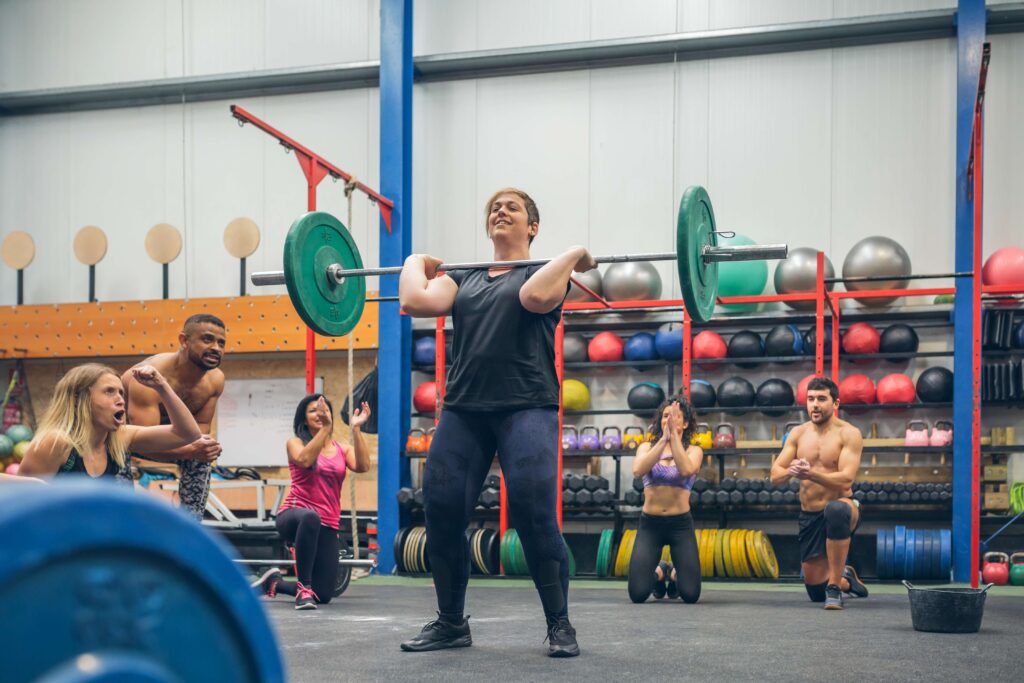 Lat Pulldown is valued for its strength and predictability of load, which is easy to control. This movement helps you train consciously without compromising your technique for extra weight. The exercise is suitable for any goal, from gaining mass to strengthening the core. That is why it can be found in programmes of various types.
The lat pulldown helps to:
- develop the width and thickness of the back by working the latissimus dorsi, rhomboid and trapezius muscles;
- strengthen the shoulder girdle, rear deltoids and stabilising muscles, which is beneficial for posture, presses and pulling movements;
- increase grip strength and forearms – when working with a cable or narrow handles;
- improve posture and core stability – thanks to the controlled mode and emphasis on pulling muscles;
- diversify your back training, especially when pull-ups are not yet possible or you want to work out differently.
The Lat Pulldown effect is visible and functional. It becomes easier to maintain good posture, perform basic exercises, and cope with everyday stress. Many note that this movement helps them feel their back working ‘from the inside’ when every centimetre of the range of motion is controlled. Most importantly, the Lat Pulldown allows for gradual progress, avoiding jerks and overload. This makes it a reliable element of any training system.
How to perform the Lat Pulldown correctly
Technique is the key to effectiveness and safety. The slightest imbalance or jerk reduces the effect and increases the risk of injury. It is important to do everything smoothly, control your body and not ‘stretch with your whole body’.
Step-by-step technique:
- Sit on the machine bench: your lower back should be pressed against the backrest, your knees should be fixed under the rollers, and your feet should be firmly planted on the floor.
- Grasp the bar with a grip slightly wider than shoulder width, palms facing away from you (a straight grip is the standard option).
- Starting position: torso straight, chest slightly forward, shoulder blades ‘pulled in’.
- As you inhale, smoothly pull the bar down, bringing your elbows back and down to your sides, trying to bring the bar to your upper chest or collarbone.
- At the bottom point, pause for 0.5–1 second – squeeze your shoulder blades together and feel your back working.
- As you exhale, slowly lift the bar back up, controlling the movement and not letting the weight ‘fall’.
Tempo, control and awareness are more important than weight. Even with light resistance, you will benefit if the movement is clean and the technique is correct.
Grip options
Lat Pulldown is one of those exercises where small changes in hand position completely change the nature of the load. The angle of the torso or the width of the hand placement can shift the focus between the upper back, the centre or the outer segments of the latissimus dorsi. Therefore, choosing a grip is a matter of finely tuning the exercise to your goals and body characteristics. Different options are useful at different stages of training – strength training requires one, volume training requires another.
- Wide grip: places greater emphasis on the outer parts of the latissimus dorsi muscles, widens the back, and helps to form a ‘V’ shape.
- Narrow grip: shifts the load closer to the centre of the back, engages the biceps, rhomboid and trapezius muscles, and gives depth to the muscles.
- Neutral (or ‘V-shaped’) grip: comfortable for the joints, smooths the load on the elbows and wrists, suitable for long workouts and endurance training.
The correct grip is a tool. Those who change their technique understand more quickly how their body reacts, which muscles are more actively engaged, and which option helps them progress. Ultimately, the variety of grips makes the Lat Pulldown a multifunctional training element that can be adapted to any direction.
How to incorporate Lat Pulldown into your training programme
Lat Pulldown is a versatile exercise. It can be used as a basic pull, as an auxiliary exercise for strength projects, or as an element of back recovery and development. For beginners – 2–3 sets of 8–12 reps, moderate weight, focus on technique. Advanced athletes may also add more variations such as wide and narrow grips, changing the pace, adding slow phases, and supersets with pulling exercises. To thoroughly and evenly develop your back muscles, you may also substitute Lat Pulldowns with pull-ups, horizontal pulls, and rowing. Keeping an eye on the load is very important. After a session of heavy pulls, deadlifts or squats, you should be taking a rest day or concentrating on mobility, light pulls, and technique.
Lat Pulldown: a basic exercise worth mastering
If you think of the gym as a workshop, the Lat Pulldown is one of the fundamental tools. It is versatile, flexible, and provides a quality workout for the back and upper body. It is important to approach it with discipline and respect for technique, understand your goals, and build a programme around balance between exercise and recovery.
The Lat Pulldown does not promise quick ‘relief’ but provides steady strength gains, a stable back shape and functionality that will come in handy not only in the gym but also in life. Add it to your programme and you will gain a reliable ‘companion’ on your journey to a strong, healthy, balanced body.
Comments are closed