
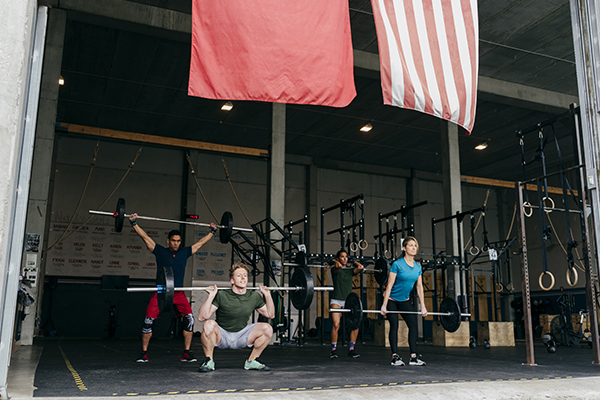
In the world of cross functional training, much is based on universal movements that develop strength, power, coordination and functionality. Among them, the jerk occupies a special place. It often appears in WODs, is used to lift weights above the head and is the basic foundation of weightlifting in mixed workouts. The jerk is a movement in which the barbell (or kettlebell, depending on the variation) is quickly lifted from the chest position using the strength of the legs and torso and fixed above the head. It is an explosive thrust, a moment of strength and coordination that involves almost all major muscle groups. Unlike static presses, the jerk requires instant leg engagement, precise body control, proper technique, and stability.
What the jerk gives you: the benefits of the movement
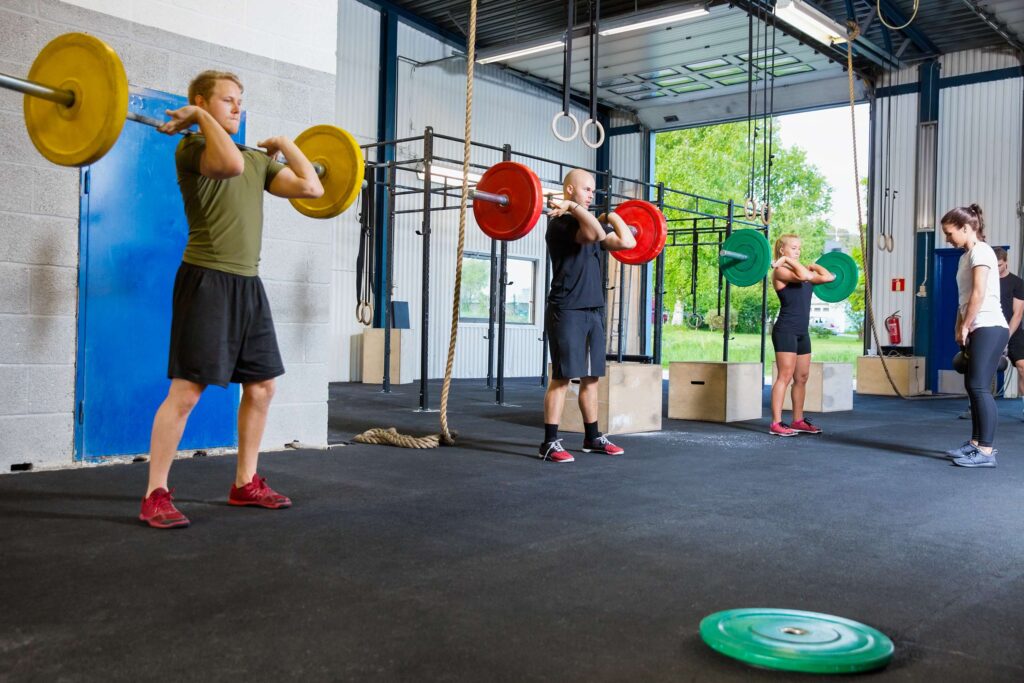
The jerk should not be a random exercise. Its power is revealed when the movement is integrated into the system, when the technique is honed and the goal is clear. The benefits of the jerk are immediately apparent:
- development of explosive power in the legs and pelvis;
- strengthening of the shoulder girdle and core stabilisers;
- improved coordination, balance, and stability during dynamic loads;
- increased overall power and ability to work with heavy weights overhead;
- preparation of the body for complex loads characteristic of cross functional training: swings, throws, metcons.
The jerk is a tool that improves the quality of basic movements: squats, deadlifts, presses, and core work. With regular practice, the body becomes stronger, more stable, and more functional.
Jerk technique: key points
Proper technique is the key to safety and effectiveness. The exercise requires precise coordination between the legs, torso and arms. Therefore, you need to approach the jerk consciously.
- Starting position: the barbell is on the front delts, elbows slightly lower, torso straight, feet shoulder-width apart.
- First dip (bend): slight bend in the knees and hips, torso remains tense, no slouching.
- Leg drive: powerful push through the heels, legs fully extended, barbell goes up.
- Drop under: as soon as the barbell gains speed, the torso lowers, knees bend, barbell is fixed above the head.
- Fixation and stabilisation: feet slightly wider than shoulder width apart, torso and pelvis fixed, shoulders locked – hold the barbell above your head without arching your back.
The jerk is a movement where stability is more important than speed. It is better to do it slowly and cleanly than quickly and with compromise.
Common mistakes when jerking and how to avoid them
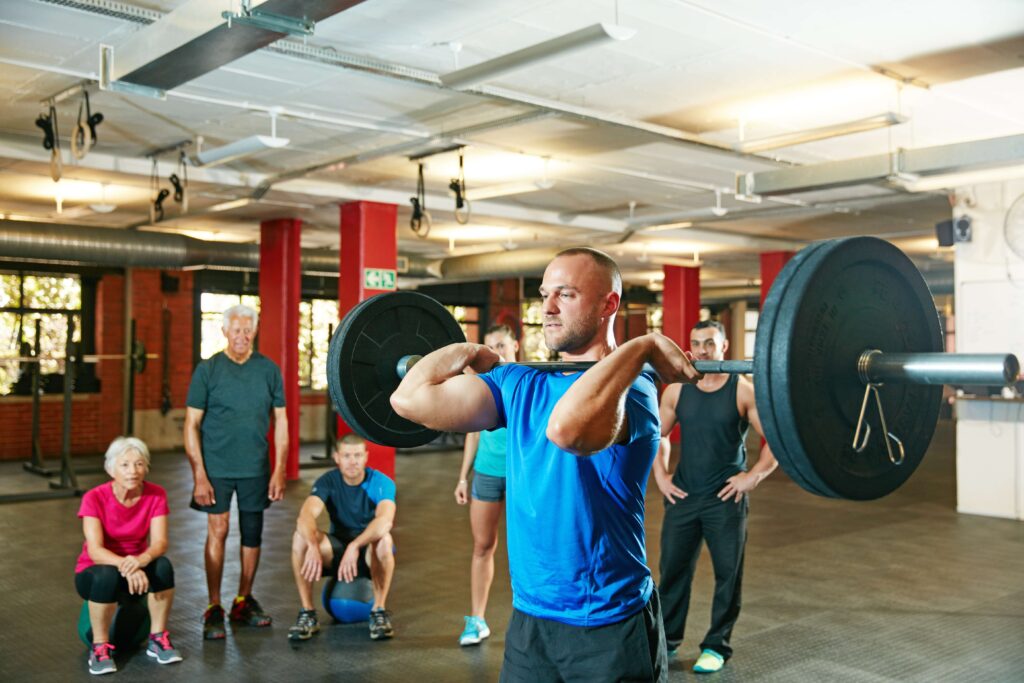
Many problems arise not because of heavy weights, but because of incorrect technique. Here are some typical mistakes and ways to correct them.
- Early dip – the barbell has not yet gained height, but you are already trying to catch it. Solution: wait until the barbell is ‘in flight’, then drop under it.
- Incorrect body position – hunched back. This reduces stability. Keep your chest up, your body rigid, and your gaze forward.
- Too narrow or too wide stance when fixing. Wide – loss of control, narrow – instability. Ideal – slightly narrower than shoulder width.
- Working with your arms, not your legs. The push should start from the legs, the arms simply guide the barbell upwards.
- Lack of control when falling under the barbell. This is dangerous. Before ‘sitting’ under the barbell, make sure your legs and torso are ready to take the weight.
It is important to practise the technique with light weights, under the supervision of a trainer if necessary. Without this, the jerk remains dangerous and ineffective.
How to incorporate the jerk into your cross functional training
The jerk is a flexible exercise that can be included as a separate lift, in complexes, and in metcons. The main thing is to take into account your physical condition and overall workload.
For beginners, it is important to start with light weights and focus on technique: several sets for technique, without excessive load. For intermediate level, one or two sessions per week: warm-up + 3-5 working sets. For advanced, use the jerk in heavy WODs, combinations (e.g., Clean & Jerk, barbell and gymnastics complexes) and in strength blocks. It is worth alternating one day focusing on strength jerk, another on cardio/metabolic development: burpees, running, gymnastics. This balance allows you to stay in shape, avoid overtraining and use the jerk as a tool for growth.
Jerk and general physical training
This exercise combines strength, power, stability, coordination, motor control, and work of the legs, torso, and shoulders. This makes it an excellent element of general physical training.
For someone who wants to be strong and functional, the jerk is a universal tool. It prepares the body for any type of load: lifting, throwing, running, carrying things, sudden movements, and ‘leg work.’ Cross functional training is built on versatility, and the jerk fits perfectly into the concept of one exercise, multiple effects, and a balance of strength and functionality.
Conclusion
The jerk is not a trick to show off your muscles or a way to lift more weight. It is a fundamental movement that combines strength, technique and control. It requires respect for yourself, for the technique and for your body. When done correctly, the jerk adds depth to your training, develops power and stability, and makes your body stronger for the barbell and for life.
If you want your training to be a means of development, give the jerk a chance. Make it your foundation, invest in technique and discipline. Then strength, stability, and functionality will come without undue haste and for a long time.
Comments are closed